
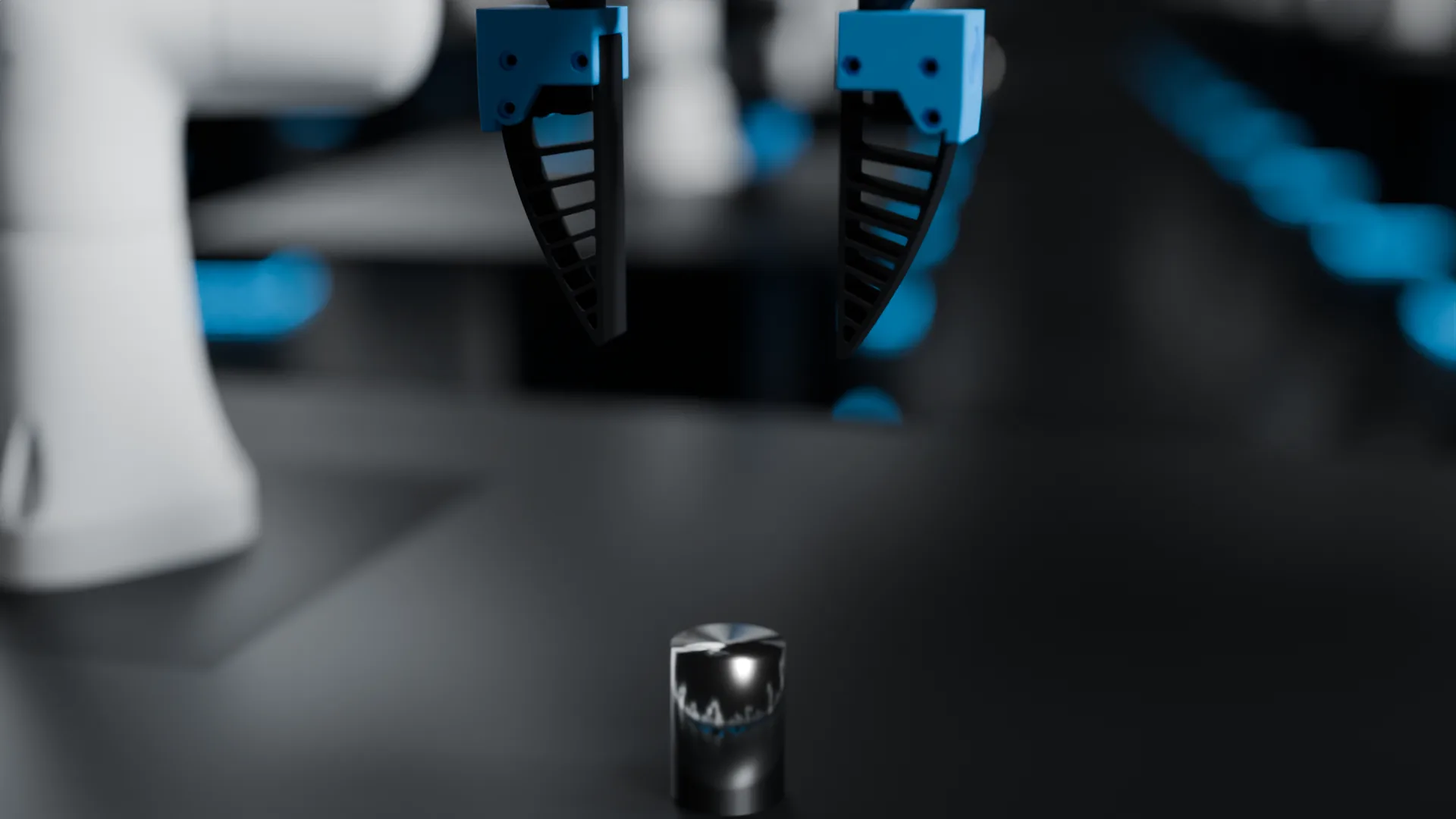
Infinite hands for humanity.
ZREK (pronounced ZEH-rek) makes a job built once on the floor run in any factory, right away.
Reproducing factory work,
at a fraction of the cost.
Human hands learn a job. But passing that job on to someone else is hard, because skill lives in the hands of the person who has it.
Robots were the same. A motion taught to one robot belonged to that robot, and when the line changed, teaching started over. This cost of reproducing work is one reason automation spreads so slowly on smaller floors.
ZREK lowers that cost with physical AI that learns from human work. A motion taught once is trained in simulation, refined on the floor, and carried to the next factory as a template. One robot's improvement reaches them all.
Infinite hands for humanity. That is what ZREK is building toward.
Industrial AI robots
On one side is physical AI, best known from self-driving cars and humanoids. On the other are industrial robots, which have repeated fixed motions with precision for decades. ZREK works where the two meet.
Operia
Operia brings the machine tool and the robot together as one system, using data from both. It takes over loading and unloading on CNC lathes, giving craftspeople's hands back to the craft.
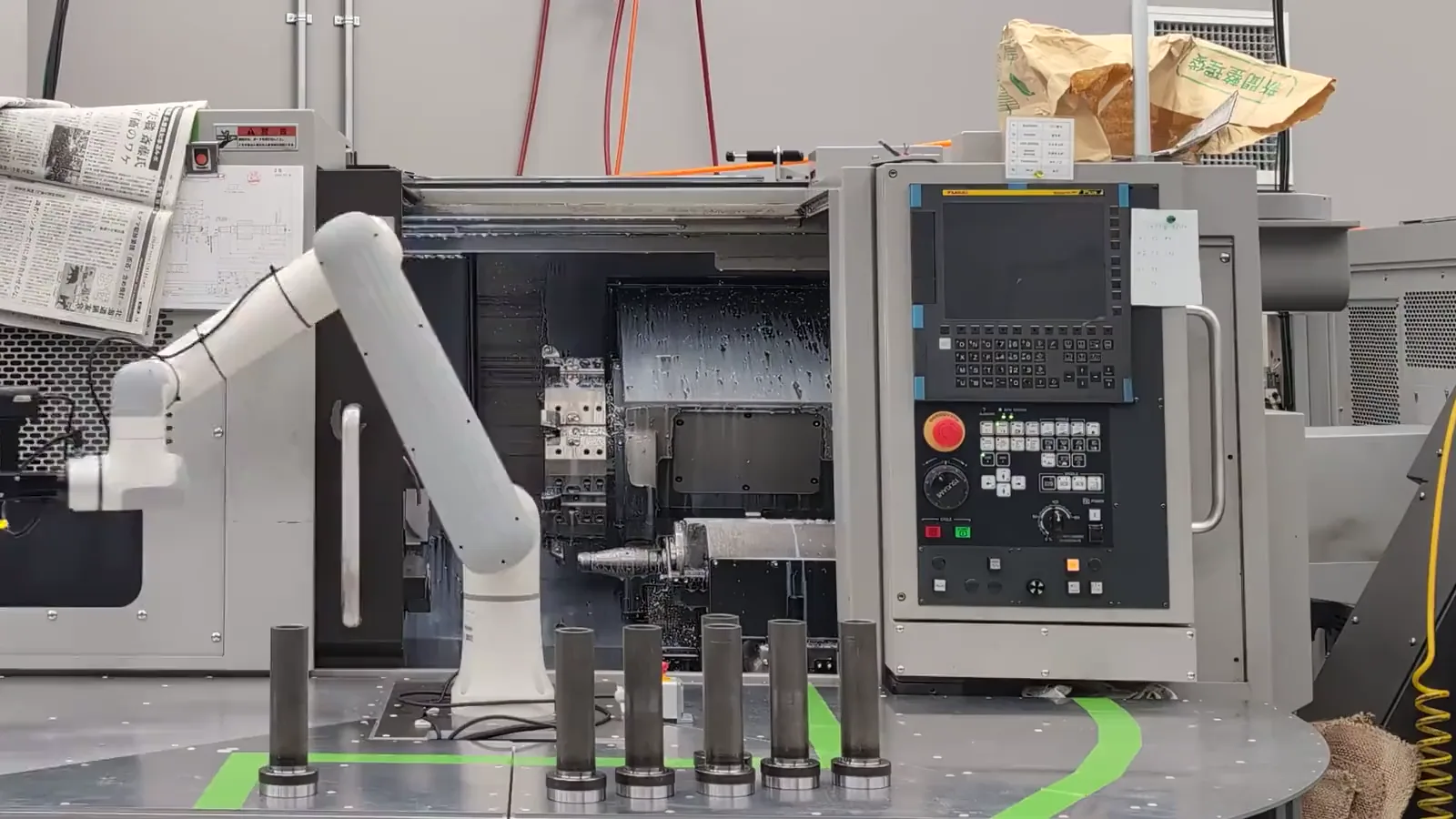
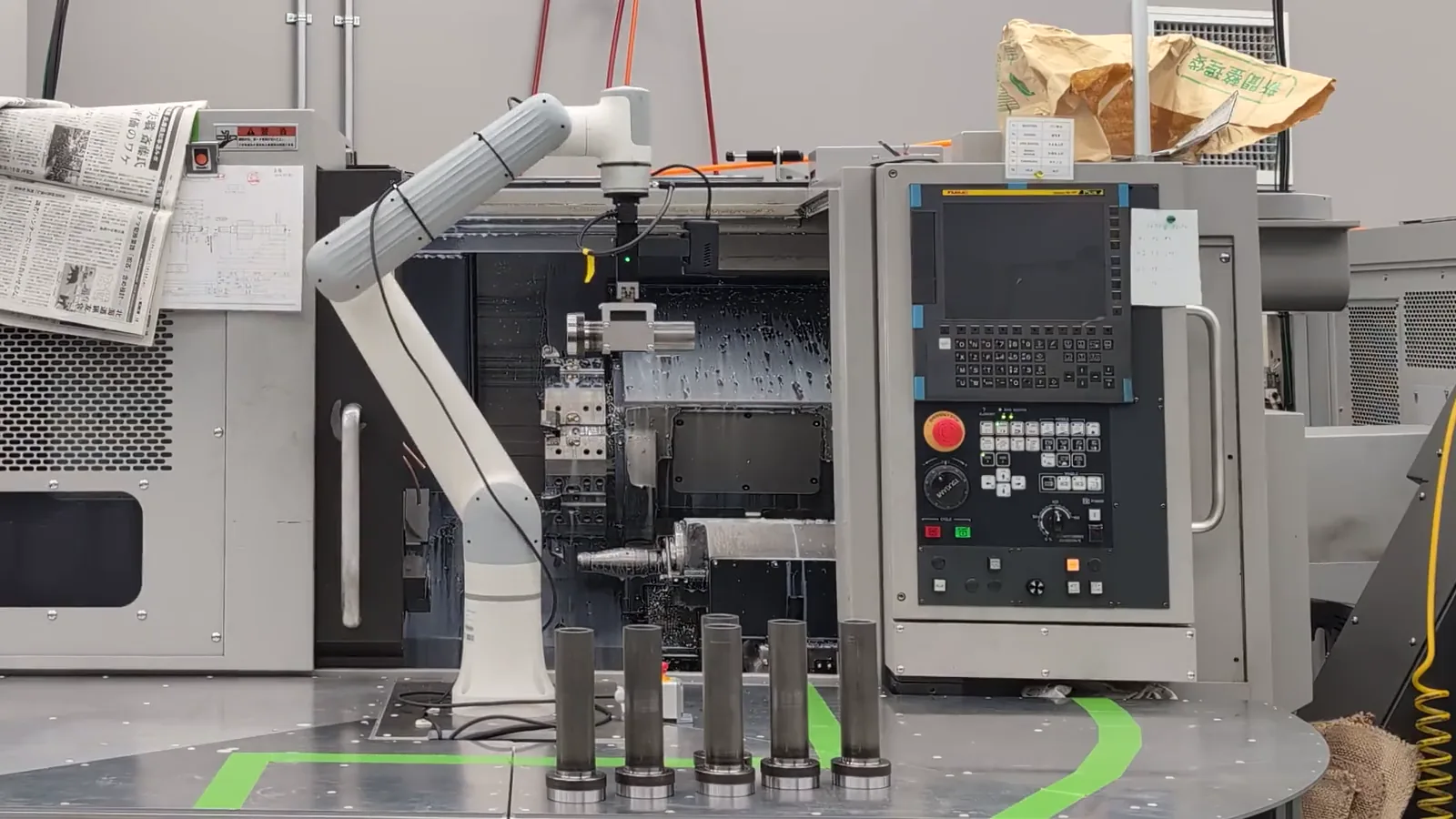
The machine-tool side of Operia
Misril
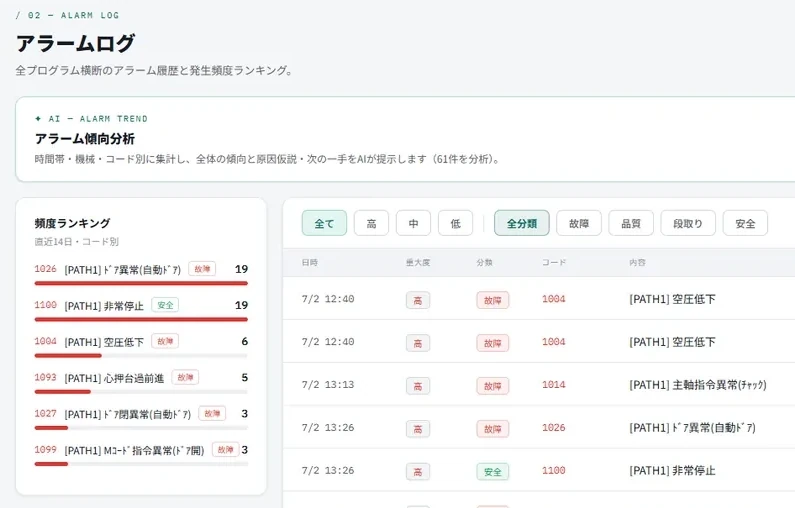
An AI agent for machine tools. It collects alarm and utilization records and reads them, so no record goes to waste.
- Today
- The reason for each stop stays buried in the logs
- Misril
- The AI gives a likely cause and the next step
Already running on the floor.
Ohya Seisakujyo Co., Ltd.
Automated workpiece loading on CNC lathes
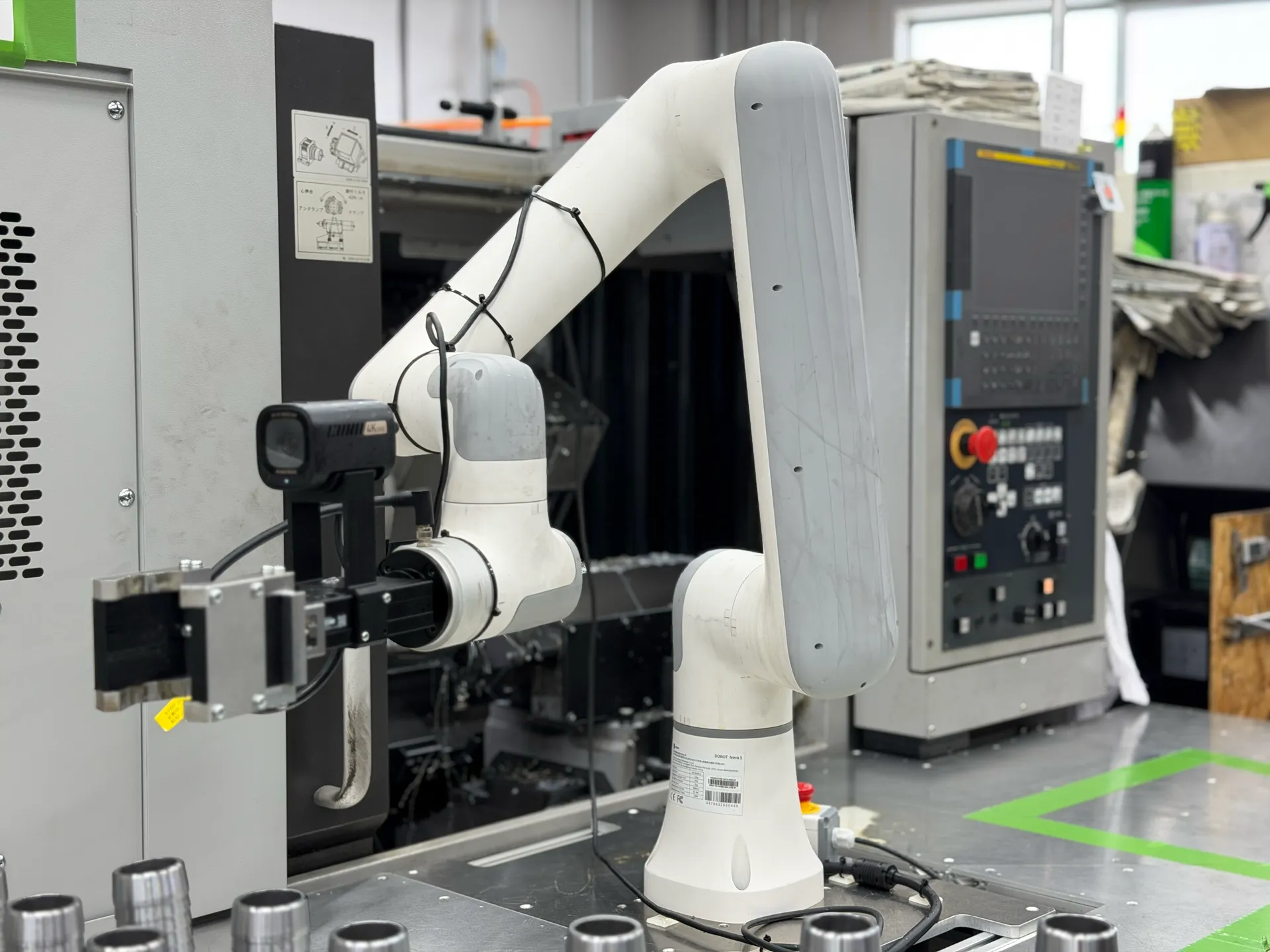
Trained in simulation before it reaches the floor.
Robots learn from motions taught by hand. Complex motions with fixed steps are rehearsed in a virtual environment built from site data, then moved straight to the real machine.
Selected clients and partners













- One robot
- One factory
- The world
What the first robot learns
makes the second one faster.
Most automation is as good as it gets on the day it goes live. ZREK robots fit the line better the longer they run.
+3learned here
+2learned here
+2learned here
+1learned here
- One robot
- One factory
- The world
Take one factory's line
straight to the next.
A line you've set up stays as a template: layout, setup, and AI. At the next factory, you adjust only what is different instead of starting over.
Template
Cell layout, Setup, Trained AI
Factory A
FittedWhere parts are placed
Factory B
FittedTray moved clear of a pillar
- One robot
- One factory
- The world
Skills learned on floors worldwide,
running in your factory.
ZREK is working toward a world where the motions and judgment a robot learns at one site can be downloaded as skills by another. New lines are built by picking the skills they need.
Sites
- Metalworking
- Electronics
- Warehouse
- Chemical plant
- Shipyard
Learned on site
Skills
- Machine tendingMetalworking
- InspectionElectronics
- Case packingWarehouse
- Plant patrolChemical plant
- Heavy liftingShipyard
New factory
Skills brought inMachine tending, Inspection, Case packing
The more they run,
the smarter every robot gets.
Taught motions and floor records build up as skills shared by every robot, so one robot's improvement reaches them all.
01Record
Taught motions and floor records
02Build up
Shared skillsv1
- MotionSkills
- JudgmentWhen and how to adjust
- SetupCell layout
03Replicate
Template and skills, to new cells
04ImproveWhat the six learned comes back and updates the shared skills
Autonomous Operator
Not bound by headcount,
industry keeps growing.
Work on the factory floor used to vanish once it was done. Now every taught motion and learned judgment stays and becomes the foundation for the next site. What we can make will depend not on how many people we have, but on how much skill we have built up.
Company
Bootstrapped since 2021, with no outside investors.
- Company
- ZREK Inc. (pronounced ZEH-rek; 株式会社Zrek in Japanese)
- Founded
- April 2021
- Representative Director
- Yuki Imamura (CEO / CTO)
- Employees
- 15
- Business
- Research, development, and supply of physical AI and robot systems
- Head Office
- Tokyo, B1F, 1-6-12 Jinnan, Shibuya-ku, Tokyo 150-0041, Japan
View on Google Maps - R&D
- ZREK Labs (Kawasaki), Room 117, KBIC Main Building, 7-7 Shin-Kawasaki, Saiwai-ku, Kawasaki, Kanagawa 212-0032, Japan
View on Google Maps
Tell us about
your shop floor.
Equipment challenges, quote requests, anything else: write to us in English or Japanese. We reply within 1–3 business days.
Build infinite hands
with us.
We're hiring for 5 roles, from AI robotics engineers to business development.
See open rolesWe build
autonomous operators.